
Reveling in the Mixed Messages of Miss Congeniality


In book ten of Metamorphoses, Greek poet Ovid tells the tale of Pygmalion, a talented sculptor living in the height of ancient Greek society.

    According to the story, Pygmalion’s sculpting prowess was so impeccable that one of his pieces, a marble woman he christened Galatea, was said to be the lovelier than any woman of flesh and blood. Pygmalion was so taken by his creation that he brought her exotic gifts, kissed her marble cheeks, even prepared a luxurious bed for her. Pygmalion so pined to be loved by Galatea that he prayed to the goddess Aphrodite to allow Galatea to reciprocate his love and affection. Aphrodite was apparently in a good mood that day, so she granted Pygmalion’s wish, giving life to Galatea, whom he then wed.

The story of Pygmalion is in essence the story of a man who creates his own idealized woman out of whole cloth (or more appropriately, marble), endowing her with all the traits that he finds appealing or alluring. The story also provides a model by which we understand social phenomena such as the Male Gaze, an aspect of film theory developed by Laura Mulvey in her 1975 essay, Visual Pleasure and Narrative Cinema.

Cover Girl (1944)
This theory posits that film as a medium enables the fetishistic gazing with the heterosexual male as the default viewer, this in deference to how historically the person behind the camera has been male. “Male gaze” puts the male director in the role of Pygmalion and the female character in the role of Galatea, a passive construct of whatever he deems to be the ideal personification of womanhood willed into reality for the entertainment of the male beholder. 

    Film obviously has a lot of this. Most of what we do at the movies is sit in our seats and stare up at whatever hot movie star is filling the screen with their overpowering charisma. And in a world that defaults to the heterosexual male perspective, that generally sees a ravishing bombshell up on that screen.

The Fifth Element (1997)
   
But Male Gaze encompasses more than simply how the female form is presented visually. The way she is characterized and the function she plays in the narrative also falls under the purview of the male eye. As we discussed in our Sarah Conner essay, even depictions of a woman as a powerful agent in her story still reflects how the male eye is willing to see her. Note, for example, how often even empowered female action heroes are still framed with a veneer of sexuality not extended to their male counterparts.

   This idea of “the male gaze” merely describes a phenomenon in film. Its presence does not itself specifically discount or disqualify the feminist designs of any given film. It is a starting point in the conversation that should encompass a film in its totality. 

Okay, but what does all that have to do with Miss Congeniality? That Sandra Bullock movie that my aunt really likes from like twenty-five years ago? The one that had William Shatner of all people playing a pageant host? What does all this have to do with that movie?

The answer is … a lot.

Miss Congeniality is a 2000 fish-out-of-water comedy directed by Donald Petrie starring Sandra Bullock. The film sees asocial and disgruntled FBI agent, Gracie Hart, going undercover as a contestant in a Miss United States Beauty Pageant to thwart a terrorist attack. The supporting players include Agent Eric Matthews (the lead agent on the case and potential romantic player), Cheryl Frasier (fellow pageant contestant who really wants to be Gracie’s friend), Victor Melling (Gracie’s bitter pageant coach), McDonald (head of the FBI), and Kathy Morningside (pageant co-host and mastermind behind the threat looming over the pageant). 

As with a lot of rom-coms of that era, Miss Congeniality does not necessarily enjoy the critical acclaim of movies like Bringing Up Baby or Breakfast at Tiffany’s. A.O. Scott of The New York Times described the film as “happily, deliberately second-rate, as if its ideal audience consisted of weary airline passengers.” The movie was a critical failure by most professional metrics, but those weary airline passengers colluded with Netflix enthusiasts, and eventually granted the film its underground cult status, which it absolutely deserves. It is not only full of zingers, it's also a film with a lot to say.

  What's most interesting is that for a film that seemed designed for the backburner, most of the conversations I have had around this movie have actually come from within the halls of academia. Even the academic term “male gaze” was introduced in class using the film’s money shot of Gracie emerging from her makeover cocoon—the shot where Benjamin Bratt has to take off his sunglasses just to properly signal his approval at Gracie evolving into her final form. But again, "male gaze" is a starting point in the conversation, and there's a lot more being said in Miss Congeniality than what you see in the film's logline.

    Consider for example that while the movie is filmed like a rom-com, Gracie’s self-actualization is mostly brought on by her making allies with other women. Yes, there’s a romantic subplot with Benjamin Bratt’s character, and we’ll unpack that here as well, but Miss Congeniality is mostly the story of one woman finding herself as she builds up other women. Hillary Jane Smith wrote for Merry Go Round Magazine

“Why most women share a lasting fondness for MISS CONGENIALITY isn’t for its jokes or plot points, but rather what it says about women and the power of vulnerability. At its core, it’s authentic female representation, albeit white feminist, 2000s-era representation: a mainstream, glossy studio picture, but one that features a diverse array of feminist values and experiences.”

The film collides with feminist schools of thought at the weirdest of angles, which leaves film scholars with lots to unpack if they are willing to see it as more than just an “airplane” kind of movie. This isn't to say that the film is beyond reproach or scrutiny, but it also shouldn't have to be in order to be an advancing agent in the discourse. Answering for certain whether a movie like Miss Congeniality is a feminist film is complicated, and in that way it only reveals the intricacies of the female experience itself.


Beauty Pageants and Megaplexes

    Miss Congeniality sees FBI Agent Gracie Hart going undercover as a contestant in the Miss United States Beauty Pageant in order to thwart a terrorist attack. The irony of this is on full display as Gracie herself is decidedly lacking in glamor, manners, or anything one might associate with a member of a beauty pageant. But with the help of some highly trained beauty specialists, Gracie is made over into a bombshell.

Still, no makeover can cover the disdain Gracie feels for the sequined world of beauty contests and the airhead bimbos who subject themselves to such nonsense. “It’s like feminism never happened!” But as Gracie throws herself into her mission, she starts to feel not only a genuine kinship with the girls, but also a reckoning of her own dormant hopes and insecurities of the kind of person she wishes she could be.

When the terrorist organization they believe to be making the threats is caught, the FBI pulls out of the pageant. Defying her superiors, Gracie stays behind through the crowning ceremony. It is during the crowning that the pageant hostess, Kathy Morningside, attempts to detonate a bomb planted on the winner’s crown, intending to pin the incident on terrorist organizations as payback to the studio for replacing her. But Gracie thwarts the attack at the last moment. Morningside is arrested, Gracie is reinstated in the bureau, and the other pageant contestants crown Gracie as “Miss Congeniality” for being the “nicest, sweetest, and coolest girl at the pageant.” 

    For such a straightforward movie, Miss Congeniality forces itself into a lot of tight, compromising positions, but it's to the movie's credit that it finds those thin overlaps where everything lines up. Fish out of water comedies, for example, generally they work best when our outlier, through their own awkwardness and tactlessness, winds up revealing the flaws of the system they are being forced into. 

Jacques Tati’s Mon Oncle sees the main character struggling to fit into the convoluted metrics of (then contemporary) 1950s French living. In showcasing how a decent guy like him feels out of place tangled up in all this machinery and bureaucracy, the film winds up exposing how maybe things like motion-activated garage doors or crowded marketplaces aren’t all that necessary. Silver Linings Playbook does something similar with putting this too-romantic-for-his-own-good dude in a situation where his unconventional optimism presents an alternative worldview to love and happiness that his circle could certainly benefit from. Miss Congeniality does a variation of that dance.

But this is also a gender comedy. On a purely visceral level, these kinds of stories provide easily translatable laughs centered on social norms the audience is very familiar with. On a deeper level, they can reveal glaring contradictions in the limits a society imposes on its population by virtue of gender. Probably the most common story template sees a man having to pretend to be a woman only to learn that being a woman is hard and maybe the patriarchy is bad, but Miss Congeniality sees a woman having to become more womanly.

    In this way, it has less in common with a movie like Some Like it Hot and more with something like My Fair Lady, itself a direct descendant of the Pygmalion tale and a sort of touchstone for how the male eye is discussed onscreen. This story sees an unflattering woman being made over by a wealthy gentleman to pass in high society, only for her to realize her own self-worth in the end. My Fair Lady landed on Broadway in 1956, just before second wave feminism. Miss Congeniality premiered over forty years after, posing questions about what a healthy expression of womanhood looks like in a world that has gone through several more waves of feminism.

As with My Fair Lady, the crux of the comedy in Miss Congeniality stems from the discrepancy of a woman who has eschewed any traditional manifestation of femininity suddenly needing to pass herself off as this pillar of womanhood. But the catch is, through the transformation Gracie starts to become a more whole version of herself, not only rising to the occasion to stop the threat, but also finding an inner peace that has long escaped her.

    This is where you quickly run into prepositions that the film is implying that the only way for a woman to be happy is to embody femininity in its most traditional form, a space governed by beauty as defined by the male eye. The film, for example, doesn’t know how to sidestep the inherent objectification overtones of something like the swimsuit competition. Gracie showing off her body in this scene is actually played as a phoenix moment. Victor reasons, “If you can do this, you can convince anyone you belong here.”

The film never lets Gracie rebut this ritual altogether, but it does let her and the contestants reclaim their image by immediately following the swimsuit scene with a sequence showing the girls having a night out with loud music, paint-stained clothes, and lots of pizza. It’s a chapter that allows the contestants to act outside the dictation of the male eye (and the male ear, Gracie does make a point to remove her earpiece during this scene, allowing her to more fully ingratiate herself in this female space) and just be themselves.

And Sandra Bullock absolutely eats this up. She gets to be comedic in a way that a lot of female actresses aren’t typically allowed to, at least not until very, very recently. And even when she is fully initiated into the glamourized world of the pageant, she never loses that edge.

    It’s not that the film ever escapes or actively rebuffs that "feminine=good" reading. It just spends its effort developing ideas that it rightfully deems more interesting: the way that femininity has historically been dismissed or underestimated by the public. It’s fair to say, then, that Gracie finding empowerment in embracing femininity can be read as her countering regressive patriarchal notions that have pushed femininity to the sidelines.


“Not Like Other Girls”

We’ve discussed in the past how the rom-com is one of those genres that has a hard time finding its footing in the modern landscape. Just last week, actress Kate Hudson pointed out how studios these days are increasingly diverting their resources into tentpole-action films, leaving the genre out to dry. Miss Congeniality is somewhat unique for blending the rom-com genre with the action-crime film. Twenty-years down the road, this is a trick film-studios would fall back on as they tried to make the rom-com genre more palatable for a wider audience. Miss Congeniality premiered when the genre was considered more commercially viable on its own, and so the combination grows directly from the demands of the story.

But this larger divergence follows a pattern in how feminine-skewed interests tend to be relegated as second-rate in a male-dominated landscape. Historically, the easiest way for female voices to find legitimacy in the discourse has been to embrace male-coded interests over things like rom-coms or beauty pageants. That is how Gracie, a woman in a male-dominated bureau, has been able to keep her footing. We are to assume that at least a part of Gracie’s masculine affect is simply her defiant spirit–her indifference to impressing people that makes her so entertaining–but a part of this is also a sort of coping mechanism. This is just how she gets her coworkers and superiors to take her seriously.


    This mirrors both how women in the workforce specifically are expected to “man up”–keeping their emotions in check and just following orders–and how behaving autonomously in any workplace is frowned upon. Gracie projects this internalized misogyny onto the pageant and all it stands for because the world has conditioned her to look upon her own femininity with disdain.

Enter Cheryl Frasier, the contestant from Rhode Island and the living embodiment of everything Gracie hates about beauty pageants. Cheryl is dainty, optimistic, and—worst of all—she really wants to be Gracie’s friend. Gracie is initially put off by her efforts, but she soon finds out it is nice to have someone on her side. Who knows? Maybe her open amiability is actually a breath of fresh air next to the male-dominated cynicism of the FBI.

       Gracie and Cheryl’s interaction in the hotel room does a lot to communicate both Gracie’s character and what she has to gain by undergoing this ritual. When Cheryl asks Gracie what she’s doing for her talent, Gracie assures her that it’s not going to be anything dumb like baton-twirling. She does this assured that such a dainty, feminine sport is a safe target on which to dump, unaware at first that this is actually Cheryl’s chosen talent.

    In the fallout, we see Gracie reckoning with the fact that though she has little regard for this world of femininity, her blanket remarks about it can feel demeaning for someone with enthusiasm for the subject. This scene culminates with Gracie offering Cheryl some positive reinforcement when she reasons that she has as much chance as anyone to win. This sets a precedent for Gracie’s larger development: accepting that femininity is a valid expression of identity, and her internalizing of this principle takes the form of more than just wearing pink.

Gracie has a full set of skills that she is only allowed to partially tap into in the FBI. She’s good with a gun, and she has resolve–historically masculine coded attributes. She also has ingenuity, good humor, and a streak of genuine altruism, traits that she’s only really allowed to tap into once she is among other women.
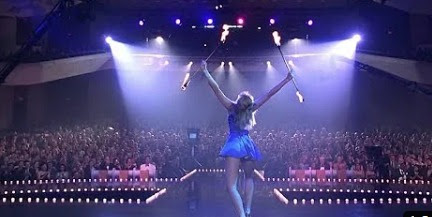
    And the relationship is reciprocated. The pageant contestants are enriched for Gracie’s involvement in their lives. Even Cheryl, the most demure of these, is allowed to cap off her character arc with an act of defiance as she conducts her talent with a pair of flaming batons. What’s more, she doesn’t have to shed her signature daintiness to cross this threshold.

This film carves out a space where self-actualizing is defined more by having a wider expression of personhood than by tethering oneself to any one spot along the masculine/feminine spectrum. The film doesn’t suppose that either masculinity or femininity are better than the other, but it does expose how one has been historically stigmatized as weaker, and it allows its heroine to attain a fuller sense of self by accessing parts of herself that she has historically been ashamed of.

It’s also not as though Gracie has to totally discard the parts of herself that are coded masculine. Gracie’s impromptu self-defense workshop is one of the best examples of her bridging these two worlds. Gracie is actually motivated to include this tutorial after Cheryl confides in her a story of being assaulted and being reminded of just how vulnerable women are made to feel in a patriarchal structure. She’s lifting up vulnerable women by tapping into traits and skill sets she accrued while working in the male-dominated workforce, a synthesis of both masculinity and femininity.

    It is also worth noting that the ultimate bad guy, the bitter former beauty queen, Kathy Morningside, is presented as a hyperbolic picture of the worst manifestations of femininity. She is vain and ruthless, such that she’s willing to blow up her own beauty pageant to get back at the studio for retiring her. She basically exists to confirm the audience’s suspicion that there is such a thing as “too much femininity.” Inserting a sort of female counterbalance to toxic masculinity dismisses any idea that one end of the gender spectrum is better than the other. (Yes, there are also some contradictions here that we'll return to later …)

         Roger Ebert wrote that the film “is harmless fun of a silly sort. It isn't bad so much as it lacks any ambition to be more than it so obviously is.” With full respects to Mr. Ebert, I have to disagree with that assessment because not only is there a lot more going on in the film than is commonly given credit, it absolutely makes the most out of its premise if you are willing to pull back like one and a half layers of subtext.


“She’s Beauty and She’s Grace”

    For an “airplane movie,” Miss Congeniality houses a very intricate persona in its protagonist. Gracie is a very rich character, not because she comes preloaded with a lot of “backstory” that the story forces her to exposit, but because her worldviews and experiences color basically every moment she is onscreen.  

    The film forecasts Gracie’s character arc with two episodes early on. Both incidents see Gracie trying to behave altruistically. As a kid, Gracie stands up to a bully picking on a little boy at recess, but this boy is ungrateful to Gracie, opining that now everyone will think he needs a girl to fight for him, and so she responds by punching him.

    We see this pattern repeating in Gracie’s life when we first see her as an active FBI agent. Going against orders, Gracie administers the Heimlich to a choking crime lord on a gut impulse. As a result, she compromises another agent on the scene, resulting in his hospitalization and a severe reprimand from her chief. In your standard hero’s journey, these acts of mercy signal the kind of altruism that heroes are known for and are often rewarded by the universe with some divine action that somehow furthers the hero on their quest to accomplish their quest. But for Gracie, it is a reminder of the liability of emotion and altruism.

    And that discrepancy sums up Gracie’s dilemma: she is at heart a hero who wants to do the right thing, but she occupies a world that does not let her behave this way. Instances in which Gracie tries to follow her heart have historically led to her being humiliated. Part of the reason why Gracie is eventually able to empathize with the pageant contestants is because they are both in their own way oppressed by the toxic masculinity that wants women to be voiceless non-agents.

    Victor probably does the most to stir Gracie out of her stupor. A lot of his snideness is framed at the start as him just being a bitter (queer coded) old man, but a lot of his infuriation with Gracie is in how she takes no pride in herself.
"In place of friends and relationships, you have sarcasm and a gun!" But why should she? She has been punished for behaving autonomously ever since she was a child. Victor's incisive remarks force Gracie to confront the true genesis of her hardened exterior.

Gracie is the way she is partially because she doesn’t care about what others think of her, but it’s also because she has internalized what the world has told her about what it means to carry your heart with you here in the real world. And a lot of this film sees her pulling herself out of this learned helplessness. Gracie’s ordeal is uncomfortable for her because of the dresses and the hair spray, but these are emblems of something deeper. Because femininity isn’t just about swimsuits and tiaras. It’s also acting on emotion and gut impulse, something that Gracie has never been allowed to do.

    The deeper she initiates herself into the world of the pageant, and the more Gracie is pushed out of her comfort zone, the more this authentic side of Gracie is allowed to show her face. There is, for example, a talent show segment where Gracie is expected to perform some special ability for the viewing pleasure of the entire pageant, and Gracie’s initial approach to this is to just do whatever Victor tells her to do. But Gracie can’t ask her coach to just hand her a talent to perform. She has to put her own self on display. She eventually lands on the idea to play the waterglasses, a little side hobby she picked up as a kid, but something that, when taken seriously, actually wins over the hearts of the audience with its sheer quirkiness.

    This sort of authenticity is something she has always wanted to utilize, but she has always been made to believe is a failing. And so this fish out of water comedy has her realizing that she isn't as at home as she had thought in her native element. Learning to tap into both sides of herself helps her attain a more complete view of who she is and what she is capable of.

More and more, this also pushes her to behave independent of the FBI and trust her own instincts. In the scene where Gracie requests that the FBI stay with the pageant, you see how Gracie’s demands are read by McDonald as womanly hysteria. That is something Gracie gets to dismantle through her efforts to protect the girls at the pageant.

Gracie allows herself to be a disruptive agent in this ecosystem right up until she’s wrecking the victor’s crowning ceremony to stop a bombing on live television. This is also why, in the last scene where Gracie is crowned and applauded by all the other girls for saving the day, you have to try hard to suppress a vigorous fist-pump. This is the first time in Gracie’s life that she has been validated instead of punished for following her heart, and seeing that ratified, well, it's honestly kind of overwhelming.

    So the real axis on which Gracie transforms hasn’t been one of masculinity vs femininity, but rather one of passivity versus activity. “Passive” is the space society has carved out for a female federal agent that it just wants to shut up and follow orders. Incidentally, this is also the space it has carved out for young women it wants to walk around wearing evening gowns and bathing suits. Gracie's journey allows her to break out of both cages. This more than anything else discredits the idea that Miss Congeniality is a sort of Pygmalion redux about a digressive woman being molded into something more palatable for the male eye. 

So there’s a very strong reading of this film that positions it as a film speaking up for a group that has been categorically undervalued, but there are admittedly some contradictions in this film's presentation that are maybe worth discussing.

We’ve talked so far about this film’s depiction of femininity, but this all naturally co-exists with a portrait of masculinity. While the male gaze is most often discussed for how it portrays the female form, the man behind the camera is obviously also crafting a statement on how he sees himself. The default depiction tends to cast the male player as the main agent in any given story with the female player relegated to an ornament in the male player’s journey, rewarding and affirming the male incentive to cast himself as the primary subject in any system. Miss Congeniality doesn’t do that with Gracie, but the story does still reveal residue of the male bias.


Toxic Masculinity Again

We should probably talk also about Agent Eric Matthews, the romantic lead. 

Gracie and Matthews are coworkers in the FBI, and probably the closest thing she really has to a friend in that space. Early on we see they have a sort of camaraderie, and they exhibit a level of comfortability with one another. Matthews ends up being the one to press McDonald to let Gracie participate in the pageant mission after she was put on probation. It’s in that scene where Matthews is urging her to accept the mission that we get a clear window into their relationship.

The scene has the two of them practicing combat, with Matthews ultimately taking her down serving as a sort of metaphor for him coercing her into accepting an assignment she really doesn’t want to participate in. This sequence is full of a lot of banter that contains one or two innuendos. When Gracie asks Matthews if he thought of her just because it’s a woman thing, he replies. “Don’t kid yourself—nobody thinks of you that way.” This scene also has Matthews slap her butt twice.

    This exchange comes right on the heels of a scene in which o
ne of the agents reveals he has repurposed the “Dress-Up Sally” program his daughter uses to dress up dolls virtually, and this is how they will judge which agent is hot enough to go undercover. All the men at the office then use this software to dress up all the women officers in swimsuits and proceed to cheer as they leer at these women who have not consented to be displayed like this. This is one of the tentpole jokes of the film, yet this movie, which telegraphs itself as dismantling female objectification, doesn’t seem to think through the implications of the joke it’s making or what it says about the men making this joke. 

To be clear, Miss Congeniality is not unique in this regard, even among other rom-coms of the early 2000s. Casual misogyny has long seeped into the space of rom-coms, as it has in most spaces, often presented as a humanizing quirk of the male characters, and this movie does inherit many of these sign posts, including the charming loveable misogynist.

        I think there is also truth to the idea that Matthews is in some ways also a victim of the male-dominated workspace that punishes altruism and vulnerability. (And I won't deny that it's actually really poetic that the story eventually lets Gracie beat Matthews up on live television.) This total reversal of the normal schematic is a part of what makes Miss Congeniality so interesting. Here, masculinity is portends non-action, passive acceptance of authority, and it is femininity that unlocks autonomy and identity. That is not an insignificant feat for a genre often saddled with the task single-handedly defining the function of gender in the discourse.
    
   It would also follow the natural trajectory of a character arc to assume that seeing Gracie pushback against this culture would inspire him to have an awakening of his own. In later chapters, Matthews ends up giving Gracie a pep talk in a moment of self-doubt, he eventually steps in and stop the other male agents from spying on her in the dressing room, and he even defies McDonald's orders and returns back to the pageant in the end to assist Gracie. I’m not saying the film is bad for letting Benjamin Bratt and Sandra Bullock kiss at the end--I'm generally here for redemption arcs--I'm just saying that the scenario does reveal a few things about the collective subconscious, including to whom we even deign the right to a redemption arc.

         After all, in painting Matthews in such a sympathetic light, the film also indulges in a fantasy that many men have crafted for themselves, that they have been good guys from the start, and that with a right alignment of elements, the invisible author in the sky will cast them as deserving of the girl, however many times he’s slapped her butt. He’s not being misogynistic: he’s just being “a guy.” Give him a chance ...

Another character worth discussing is the character of Frank, the assistant to Kathy Morningside (we find out he is also her son). This character makes frequent under the radar passes at the contestants, and so the film uses him as a token of male predation that has historically been allowed to thrive in the workplace. Where the FBI agents leering at female agents on a computer screen is just “boys will be boys,” multiple characters actually call out “disgusting, perverted Frank” for being a creep, which he is. But Frank gets no redemption. He is actually a key player in the bombing threat, which of course surprises no one.

And the reason why Matthews gets to learn the errors of his ways and Frank goes to jail is very simple: Benjamin Bratt is hotter than Steve Monroe. To that, Matthews’ station in life is more admirable. He’s FBI, and heading his own mission to boot. Frank is working for his mom in his thirties. The male viewer will want to see themselves more in a character like Matthews than a character like Frank, and so they will want the film to cast him as deserving of a sympathetic redemption–that is, if they ever saw his casual misogyny as transgressional to begin with. (Sidenote: offscreen, Steve Monroe is actually a practicing psychotherapist who specializes in treating those in the entertainment industry with addiction problems, further proof that the eye of the camera says very little about the actual goodness of a person.)

  And this is another reason why it is interesting that the film’s ultimate villain is herself a former beauty queen. From a certain perspective, Morningside is just as much a victim of the male eye as Gracie or any of the pageant contestants. She is being discarded casually after the male eye has deemed her no longer worthy of attention. And yet the story chooses to put her in a position of the surprise villain of the story.

    The bad guy in this story about female objectification ends up being not a character like Matthews or even Frank, but a portrait of hyper-femininity itself. Mean Girls does something similar with Regina George being the big baddie and also the living embodiment of “toxic femininity,” but it’s easier to imagine that Regina could have a coming to Jesus moment where she realizes that she is ultimately misdirecting her anger toward a male dominated institution. I don’t know if that would be available to her if she tried to blow up Gretchen Weiner. 

And this all ties back to the idea of the male gaze as the ultimate lens through which stories get told. It is through the male gaze that women are cast as damsels or waifs, and it is also through the male gaze that men are given carte blanche so long as they meet certain criteria of manliness.


“I Really Do Want World Peace”

        When you plug both the movie’s victories and its shortcomings into the equation, what is the net value of a movie like Miss Congeniality? Do we grant it a place in the pantheon as a feminist text?

         By design, I think there should be a range of answers to this question--varied dialogue is how you get nuanced discussion. I think we can be conscious of the blindspots of a film like Miss Congeniality and how to sidestep them while also being grateful to this film for what it does offer--and what it offers is not inconsiderable.

Lady Bird (2017), The Farewell (2019),
Wonder Woman (2017), Promising Young Woman (2020)
    Most would agree that the biggest battleground is that of letting female eyes behind the camera to mold the female experience as they see fit, whether that experience be one of strength or distress, championing femininity or subverting it. Putting female authors in the position of Pygmalion to mold Galatea as they see fit.

This isn’t to say that male filmmakers should never be allowed to tell stories centered on strong, complex female characters. (For reference, this essay comes from the keyboard of a dude talking about feminism.) Indeed, this is a conversation everyone should be a part of. But seeing an increase in female authors leaving their mark in the film conversation is a natural conclusion to the kind of advocacy Miss Congeniality is pushing for, and I think the dialogue could only grow more finessed and more nuanced when you let the relevant community advocate for themselves.

But something I think is worth noting is that if you look at these modern heroines of female cinema, a great many of them bear more than a passing resemblance to Gracie, and that's worth remarking upon.

--The Professor

And also, this is pretty great

Comments

  1. Loved the reference to Pygmalion.

    When I read your reviews, I usually finding myself saying "Wow! I never thought of that before." Curiously, on this one, you and I had 100% the same response to the message of this movie. You did a great job of making the point, and I think you're spot on regarding the non-so-subtle message of Miss Congeniality!

    ReplyDelete

Post a Comment

Popular posts from this blog

REVIEW: HOPPERS

     In the 1950s under the threat of nuclear warfare, Hollywood premiered such exercises as The Day the Earth Stood Still or War of the Worlds where an alien power would pass judgment on humankind, holding its fate in its hands. Here in the 2020s under the shadow of such threats as climate change, Hollywood sends to be our judge ... beavers.     Let me back up ...      Daniel Chong's new film from Pixar Animation, Hoppers , sees  Mabel (Piper Curda), a college student whose self-appointed mission is to preserve the glade where she used to find sanctuary with her now deceased grandmother. Her biggest opponent is hometown boy and beloved mayor, Jerry (Jon Hamm), who has designs to plow over the glade in order to open his new freeway--estimated to save travelers four whole minutes of commuting.       Mabel gets her golden opportunity when she uncovers secret technology pioneered by her professor which allows a human to rem...

Butch Cassidy and the Sundance Kid: Westerns Riding off into the Sunset

In both my Les Miserables and Moulin Rouge! pieces, I made some comment about the musical as the genre that receives the least love in the modern era. I stand by that, but I acknowledge there is one other genre for which you could potentially make a similar case.  I am referring of course to the western film. See, musicals at least have Disney keeping them on life support, and maybe one day we’ll get the  Wicked  movie Universal has been promising us for fifteen years [FUTURE EDIT: All good things, folks ]. But westerns don’t really have a place in the modern film world. Occasionally we’ll get films like  No Country for Old Men,  which use similar aesthetics and themes, but they are heavily modified from the gun-blazing-horseback-racing-wide-open-desert w esterns  of old.  Those died, oddly enough, around the same time musicals fell out of fashion.              Professors Susan Kord and El...

The Pleasantville Lie

Lynn Hunt, American Historical Association, University of California 2002, is best known for her 2007 work Inventing Human Rights , a cornerstone for academic work on the history of human interaction. This landmark work tracked the developing concept of human empathy across European history, especially the function that art and literature played in allowing humans to recognize the interiority and dignity of other humans who were different from them. But in 2002, she shared in the May Issue of Perspectives on History her observations in “presentism,” and the uphill battle of even getting students to engage with history at all, Gladiator (2000) “Presentism, at its worst, encourages a kind of moral complacency and self-congratulation. Interpreting the past in terms of present concerns usually leads us to find ourselves morally superior; the Greeks had slavery, even David Hume was a racist, and European women endorsed imperial ventures. Our forebears constantly fail to measure up to our ...

Silver Linings Playbook: What are Happy Endings For Anyway?

            Legendary film critic Roger Ebert gave the following words in July of 2005 at the dedication of his plaque outside the Chicago Theatre: Nights of Cabiria (1957) “For me, movies are like a machine that generates empathy. If it’s a great movie, it lets you understand a little bit more about what it’s like to be a different gender, a different race, a different age, a different economic class, a different nationality, a different profession, different hopes, aspirations, dreams and fears. It helps us to identify with the people who are sharing this journey with us. And that, to me, is the most noble thing that good movies can do and it’s a reason to encourage them and to support them and to go to them.” Ebert had been reviewing films for coming on forty years when he gave that assessment. I haven’t been doing it for a tenth as long. I don’t know if I’ve really earned the right to pontificate in this same manner. But film ...

All The Ways Sunset Boulevard Has Aged Gracefully

So, stop me if you’ve heard this before: Hollywood has a dark side.          Particularly in the wake of something like #MeToo or the double strikes of 2023, you can really get a sense for just how famishing, even degrading, it can be trying to make a living in Hollywood. But of course, it all goes back much further than those. One of my very first essays for this blog was a catalogue of all the ways Hollywood ravaged Judy Garland , to point to another example. Yet for all its mess, we cannot take our eyes off of Hollywood, or the people who build it.  Stardom in particular becomes a popular focal point—what is it really like being on the other side of all that spotlighting? And Hollywood has naturally supplied the market with all sorts of imaginings for this as well. Thus, each generation gets its own version of A Star is Born. John Wayne and Maureen O'Hara in The Quiet Man (1952)      Ty Burr wrote in his landmark work,...

Notoriously Human: Alicia and the "Strongfemalecharacter"

    The further I dive into classical Hollywood, the more taken I am by all its fascinating contradictions.       This wasn't, I'll acknowledge, a period in American history which we think of as being kind toward women or recognizing their autonomy.  The Mark of Zorro (1920)          I think the collective point of reference most people have for women in old movies is the sort of hero's trophy who waits around for the guy to swoop in and carry her out of the mess she has made for herself, and that image has some basis in how Hollywood itself behaved.  But film history covers a lot more than just that one type.                 The Hays Code prohibited illicit sexual material on film, among other things, and was in effect until the early 1960s. Because sexual content was greatly monitored and regulated, female characters weren’t really objectified--at lea...

PROFESSOR'S PICKS: 5 Films I Missed in 2020

                  Given the peculiar nature of this year’s run of movies, neither a traditional “Best Films of 2020” nor a traditional “Most Anticipated Films of 2021” feel appropriate. Instead, I’m going to do something in between: A spotlight of movies that I was looking forward to in 2020 that have now been bumped into a 2021 release date. There are other films set to release in 2021 that I have on my radar (most of them simply premiering later in 2021 than originally planed), but here are five films that I missed this year in 2020. This installment of Professor’s Picks is partway between a memorial and a forecast. Weep with me, celebrate with me, whichever jives with your inner truth. Anyways . . . five movies long eager to graduate from my list of anticipated movies.   1. A Quiet Place: Part II March 20, 2020   April 23, 2021   September 17, 2021  May 28, 2021 Admittedly,...

An Earnest Defense of Passengers

          I've heard a lot of back and forth over what the purpose of film is and what we should ask from it. Film as a social amenity kind of has a dual purpose. It's supposed to give the population common ground and find things that people of varying backgrounds and beliefs can unify around. On the other hand, film also creates this detached simulated reality through which we can explore complex and even testing ideas about the contradictions in human existence.     In theory, a film can fulfill both functions, but movies exist in a turbulent landscape. It's very rare for a film to try to walk both lanes, and it's even rarer for a film to be embraced upon entry for attempting to do so.  Let me explain by describing the premise of one of my favorite movies, Morten Tyldum's 2016 film, Passengers .      A key piece of this film ’s plot revolves around the main character, Jim Preston, a passenger onboard a spaceship, who premat...

The Belle Complex

As Disney fandom increasingly moves toward the mainstream, the discussions and questions that travel around the community become increasingly nuanced and diverse. Is the true color of Aurora's dress blue or pink? Is it more fun to sit in the back or the front on Big Thunder Mountain? Is the company's continued emphasis on producing content for Disney+ negatively impacting not only their output but the landscape for theatrical release as a whole?  However, on two things, the fandom is eternally united. First, Gargoyles  was a masterpiece in television storytelling and should have experienced a much longer run than it did. Second, Belle's prom dress in the 2017 remake was just abominable.      While overwhelmingly successful at the box office, the 2017 adaptation is also a bruise for many in the Disney community. Even right out the gate, the film came under fire for a myriad of factors: the auto-tuned soundtrack, Ewan McGregor's flimsy accent, the distracting plot...