
The legacy of Judy Garland is somewhat paradoxical. On the one hand, she's a portrait of American optimism and wholesomeness. On the other hand, she stands for the bleak and rancid underbelly of the Hollywood dragon. Even to the most casual film viewers, the name "Judy Garland" brings to mind the indelible young star who filled monochrome Kansas with color through her angelic singing voice in the legendary film, The Wizard of Oz. At the same time, the narrative of "Judy Garland--OG Victim of Hollywood" has grown increasingly popular.
So I guess it was only a matter of time before Hollywood did what it does best and make a movie out of its own abuse of Judy.

The 2019 biopic "Judy" sees Renee Zellweger portraying Judy Garland through her final public performances. This isn't Judy fresh out of Kansas: this is after the drugs, the failed marriages, and the suicide attempts.
Though the film reliably acknowledges Dorothy Gale as Judy’s signature role, it isn’t until the final scene of the movie that Judy finally graces us with a rendition of “Over the Rainbow.” Wracked with all the trauma she’s accumulated over years of being exploited, Judy chokes up midway through the performance and is unable to continue. At this point, members of the audience stand in their seats and start to sing the song for her until the entire auditorium is singing along. Upon finishing, they shower Judy in applause, and she can only tear up in gratitude.
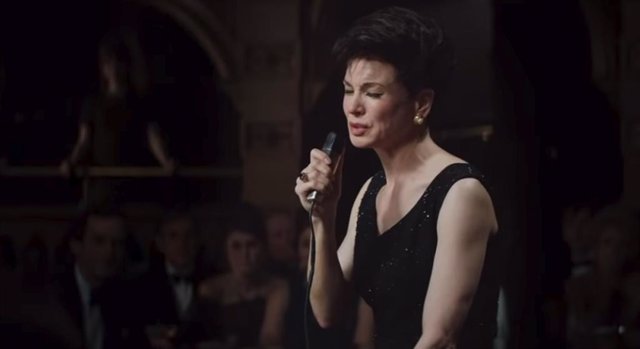 There's some debate about whether or not this scene is entirely fictitious, but it's commonly accepted that if this scene ever took place it was not at the London 1968 concerts this film depicts. This scene was planted here by film executives who knew this film would be viewed by modern audiences familiar with Judy Garland, even if only casually, and would no doubt be troubled by seeing Judy's tortured off-screen life. These same modern audiences might even wonder if after years of systematic psychological injury, would Judy Garland, or heaven forbid most movies stars, have been better off without the spotlight?
"But never fear!" this film assures us. "Whatever torment a life of celebrity wrought on her, Judy’s love of performing for her adoring audiences trumps any trauma she’s endured. Now bathe her in more applause!" And this where the whole ordeal becomes a little knotted: the film claims to liberate the image of Judy Garland from the chains of Hollywood abuse while empowering a mindset that enabled that abuse. While we want to see ourselves as the golden sun that nourishes the celebrities we love (indeed, film executives are praying you will), we also have the capacity to wreck them inside and out.
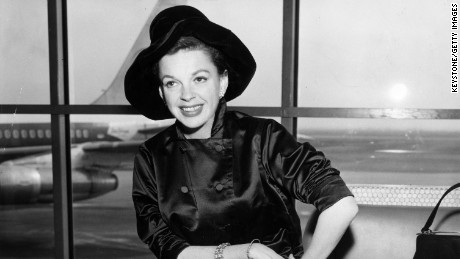
Whether or not that completely negates the merits of the Judy Garland movie is honestly a question I'm not prepared to answer. For today, I'm just content to say, the movie has definite blind spots that need to be addressed. Because while the narrative of Hollywood's exploitation of Judy Garland is part and parcel to how we discuss the industry today, there is relatively little discourse on how many of the same mechanics that afflicted Frances Ethel Gumm, the girl from Minnesota who would become Judy Garland, are not only still alive, but still thriving in the modern landscape. And that sounds like the kind of thing we should be mindful of.

The Life of Judy Garland
Born Frances Ethel Gumm, Judy and her sisters were groomed into being entertainers by their mother who had hoped they would break into stardom. Judy once said, “The only time I felt wanted when I was a kid was when I was on stage, performing.” If there is truth to the idea that Judy felt genuine nourishment from the love of applause, it's because she was looking for the kind of love she should have felt from her family.
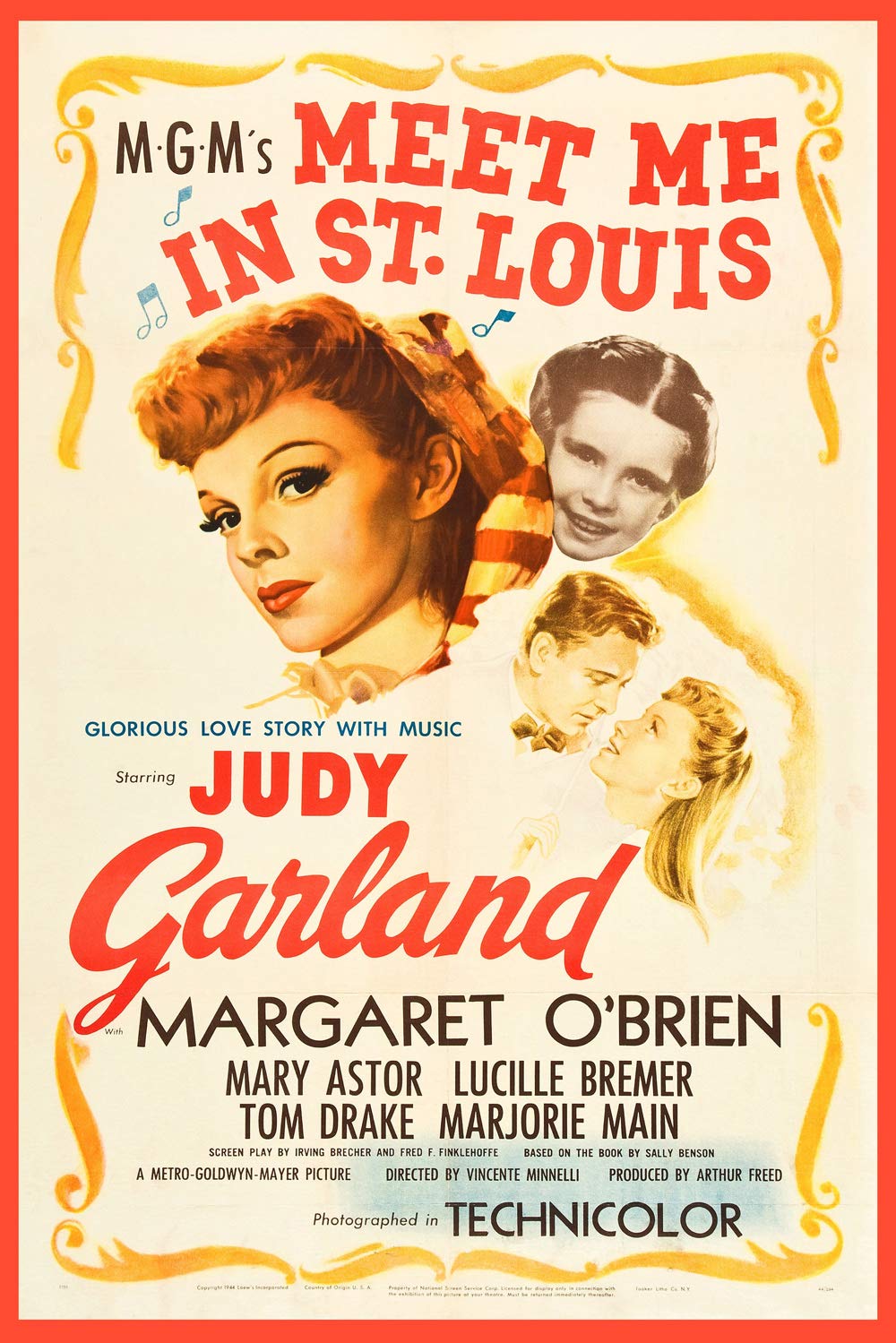 Judy signed on to star in MGM films when she was thirteen, leaving her in prime position to find what would ultimately be her defining role, Dorothy Gale in The Wizard of Oz. Though Judy lit every screen she was projected on, life behind the screen was unkind to her. Studio heads constantly called attention to her physical appearance, with producer Louis B Mayer referring to her as "little hunchback," planting seeds of a self-image problem that would haunt Judy for life. She experienced sexual assault from studio executives as early as 16 years old, and they would continue to control Judy's body for the remainder of her career.
 These were all necessary measures if Judy was to maintain her image as the girl next door who was as cute as they come but could also be your best friend. This image worked. Everyone wanted to be her best friend or boyfriend. Judy was made to be thin and bushy-haired because that’s what celebrities are because that’s what audiences want them to be. With the roaring crowds came the demand to appear likable at all times and the paparazzi to catch her when she wasn’t.
 Judy experienced heavily publicized slip-ups including suicide attempts and trips to rehab. The cycle was predictable: The spotlight would overwhelm Judy, she’d self-destruct, intervention, she’d get better, audiences would want her back, the spotlight would overwhelm her, rinse, repeat. Late in life Judy said, “I’m getting tired of coming back. I really am. I can’t even go to the powder room without making a comeback.” After a few cycles, she started to be treated like a liability by the studios who used her. Judy would simply feel too ill or anxious to show up to set and cause expensive production delays. At least one of these episodes, Judy’s brief participation in 1950’s Annie Get Your Gun, would result in her being recast during production.
Judy signed on to star in MGM films when she was thirteen, leaving her in prime position to find what would ultimately be her defining role, Dorothy Gale in The Wizard of Oz. Though Judy lit every screen she was projected on, life behind the screen was unkind to her. Studio heads constantly called attention to her physical appearance, with producer Louis B Mayer referring to her as "little hunchback," planting seeds of a self-image problem that would haunt Judy for life. She experienced sexual assault from studio executives as early as 16 years old, and they would continue to control Judy's body for the remainder of her career.Judy underwent studio-mandated abortions twice, and efforts to suppress her weight included strict dietary regiments that made little allowance for more than chicken broth and cigarettes. Judy was almost always under the influence of some medication: pills for sleeping, pills for staying awake, pills for suppressing her appetite. Between the drugs the executives shoved down her throat and the drugs she used to silence her own internal screaming, Judy was poisoning herself.

Perhaps Judy's most infamous public embarrassment was her 1964 concert series in Melbourne. Prior to the performance, Judy was experiencing her latest episode of anxiety and arrived on stage well over an hour late, entirely drunk. The temperament of the already strained audience grew more severe every time Miss Garland forgot lyrics to a song, fell over, or ran off-stage for long stretches of time. Consistently heckling her throughout the performance, the audience eventually booed Judy off-stage. The masses would loosen their death-grip on Judy eventually, but not before squeezing the last drops of blood from her.
 Judy Garland died at age 47 from an overdose of drugs she'd been hooked on since she was a teenager. Her death was not ruled as a suicide. Costar James Mason said of her, “Judy’s greatest gift was that she could wring tears out of hearts of rock . . . She gave so richly and so generously, that there was no currency in which to repay her.”
Judy's abuse has become a larger part of her discourse as time has gone on. Just so, Hollywood treats the matter as a one-off incident instead of an inevitable product of a system that commodifies a person's image for public consumption. And that's really where the issue comes in, isn't it? Public consumption. Paparazzi are a really good fallback for this argument. Makes sense. They are the ones literally hounding the celebrities in question, but they are ultimately middlemen serving a market, and that market is ... audiences. Regular people. Us. Maybe audiences weren't shoving drugs down her throat, but they were cheering her on for returning to the coliseum to fight off predatory executives, paparazzi, and work schedules that rattled her already compromised mental health. Judy’s long ride into hell was propelled by an inability to escape the spotlight. Hollywood will never admit this, but Judy didn’t need a comeback. She didn't need her fans to love her more. She needed to get out. And we needed to let her.
 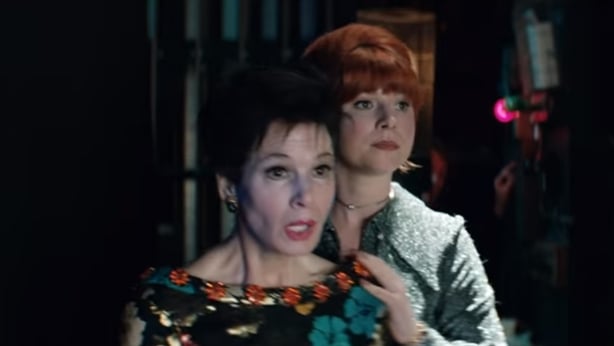 The biopic acknowledges the abuse Judy faced, yes, but frames the abuse in such a way that puts the blame on bad individuals who had charge over her—not on the system itself. The domination Louis B Mayer had over young Judy is contrasted with how Rosalyn Wilder, Judy’s manager in London, shows genuine concern for her, asking her toward the end of the tour if she’s going to be alright. Whether or not real-life Wilder was actually as kind to Judy as this film suggests, she has a very clear purpose in this equation: she's there to show the audience what the system is "supposed" to look like and leave them thinking, "Man, if only Judy had gotten someone like her as a manager when she was a child star, the limelight wouldn't have phased her" ....
 There's something similar going on in how the film depicts the celebrity-fan relationship. Midway through the film, Judy encounters a pair of gay lovers who attended her performance. Needing an escape, Judy accepts an invitation to their apartment. They (try to) make dinner for Judy and these fans get to know their celebrity guest on a level that runs deeper than just an autograph and a meet and greet: they see and validate Judy as a person, something she does not often experience from the people who claim to adore her.
Judy’s inner turmoil would spill over into her personal life as well. Mismanagement of her finances left Judy broke and unable to properly care for herself. She would also go through five marriages in her forty-seven years of life, and Judy has gone on record saying that at least two of these men were physically abusive toward her. She had her share of lovers during her time, but few if any saw her as a person rather than a medal. Beyond that, Judy Garland was simply a broken woman whose personal demons and traumas had left her incapable of finding happiness.
Judy's abuse has become a larger part of her discourse as time has gone on. Just so, Hollywood treats the matter as a one-off incident instead of an inevitable product of a system that commodifies a person's image for public consumption. And that's really where the issue comes in, isn't it? Public consumption.

Hollywood: Have Your Star and Eat it
The biopic acknowledges the abuse Judy faced, yes, but frames the abuse in such a way that puts the blame on bad individuals who had charge over her—not on the system itself. The domination Louis B Mayer had over young Judy is contrasted with how Rosalyn Wilder, Judy’s manager in London, shows genuine concern for her, asking her toward the end of the tour if she’s going to be alright. Whether or not real-life Wilder was actually as kind to Judy as this film suggests, she has a very clear purpose in this equation: she's there to show the audience what the system is "supposed" to look like and leave them thinking, "Man, if only Judy had gotten someone like her as a manager when she was a child star, the limelight wouldn't have phased her" ....
The adoration these two have for Judy is played as sincere, and I believe they genuinely capture the earnest respect a fan can have for their chosen icon. They revere her not just because she's famous but because she's a symbol for overcoming. To these two, Judy is not just a doll to play with; she’s an example of hope and perseverance. In the film’s final scene, it is these two who lead the audience’s round of “Over the Rainbow.” Coming from them this gesture feels sincere because we know their love comes from a genuine connection.

One movie that does something similar is Satoshi Kon and Kô Matsuo's 2001 anime masterpiece, Millennium Actress. The film sees two documentary filmmakers interviewing a fictional actress near the end of her life as she reckons with both her legacy as a pop culture icon and a human being whose rise to stardom was sort of a facade covering deep-rooted human longings. We see that even as these insecurities helped fuel her onscreen performances, there was still a disconnect between the onscreen persona that audiences fell in love with and what the person performing this ritual for the entertainment of the masses.

It’s not as though Hollywood never allows any space for discussion on the potential poison of the star system, but Hollywood is very careful in how they present this issue. Movies like My Week with Marilyn humanize their celebrities only enough to turn them into compelling characters but not enough to actually make audiences think their idolizing of celebrities is suffocating them. Hollywood wants to dress the idea of celebrities under pressure in a way that is enticing to the ticket-buying population without making this ticket-buying population worry that they are strangling modern day Judy Garlands.
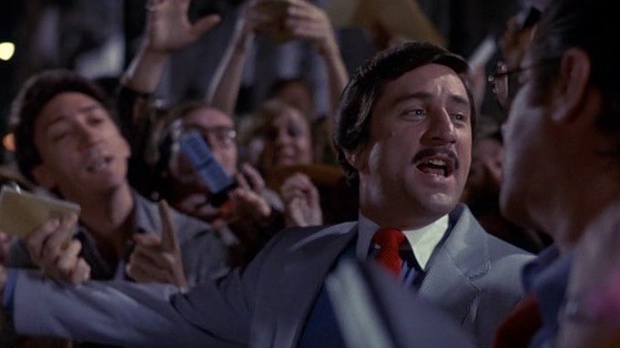
A rare film that breaks this pattern is Martin Scorsese’s 1982 film The King of Comedy. This dark comedy centers around a celebrated comedian, Jerry Langford (Jerry Lewis), fending off the efforts of two hyper-obsessed fans who will do anything to perform on his show. One of these, aspiring comedian Rupert Pupkin (Robert de Niro) feels particularly empowered after helping Langford escape from his mob of fans, many of whom are climbing over one another trying to get their grip on Langford’s sleeve. After saving him, Pupkin becomes convinced that he is owed Langford’s attention. Pupkin’s obsession will eventually culminate in him and a fellow Langford devotee kidnapping and ransoming Langford for a slot on his show.

This King of Comedy’s examination of the relationship between fans and celebrities is considerably more critical than something like the Judy Garland pic. Audiences are allowed to see themselves as demanding and entitled, and I personally consider this to be the main reason why the movie was not met with financial success. Perhaps the ticket-buying audience doesn’t like being told, even in the most coded way, that they need to not suffocate their celebrities. And so, Hollywood continues to put out movies that leave the audience’s ownership of celebrities unquestioned.
I’m not prepared to say that Hollywood is deliberately or maliciously sabotaging the souls of its stars, I’m just noting that there are questions we can't expect the Hollywood machine to ask. Whatever the reality of the situation is, Hollywood will never paint such a despairing picture of celebrityhood that they risk losing that draw. Hollywood does not want you to become too critical of how it abused its greatest resources, and it especially does not want you to wonder if those same methods of abuse are still at work today.
Fighting the Fight Today
Flash forward to today and the current state of celebrity well-being, and it’s difficult to say whether or not we’ve improved, or whether we’ve even gone backwards. Developments such as social media have brought both good and bad into the mix.
#MeToo and its companion movement #TimesUp have certainly done a lot to advance the protection women receive in Hollywood, though perhaps we’re not quite far out enough yet to determine their long-term effects. It’s also telling that high-profile celebrities such as Kristen Bell not only have the vocabulary to talk openly about their battles with mental health, but also an audience who will listen to them, an affordance Judy Garland certainly didn’t have. Other celebrities are pushing for a more reasonable expectation of body type for celebrities. Said television star David Harbour:
 “I’m sick of these bodies on television that are impossibly thin — and the guys train for months and months and then they even stop eating a couple of days before and dehydrate to look a certain way. I want people to feel good in their bodies, like I’m sick of twigs on both ends of the spectrum, men and women. I’m totally tired of twigs.
“I want people to love their bodies. Look, I don’t want you to be unhealthy. I want you to take care of yourself, take care of your heart. We don’t want you to be obese. But these impossible standards that Hollywood sets — I don’t find those people sexy anymore. I find them narcissistic and I find them cruel to culture because I think that art is meant to lead people. I don’t want that cruelty in our bodies anymore.”
What's interesting with Harbour isn't him verbally speaking out against that standard of beauty, but that audiences have embraced Harbour's championing of the dad bod and that he's become something of a sex symbol despite being stockier than the standard Hollywood hunk. Granted, a man like Harbour is going to have more luck challenging that front than a woman would, but it is indicative of a willingness to change how we define perfection and how we do or don’t expect our celebrities to reflect physical beauty. Perhaps these breakthroughs come as a product of greater social awareness and a willingness to let our celebrities breathe.
Alternatively, perhaps with the star system still in use and the windows into the personal lives of celebrities only increasing, the game is still the same even if the playing board has changed. Celebrities are still sold and marketed on maintaining a certain image that will appeal to the masses, it’s just that the image being sold is authenticity, or at least the performance of it. Are we so sure the celebration of the dad bod doesn’t just mean we’re worshiping average bodies in addition to idealized bodies? Far from permitting relatability in our celebrities, we’ve fetishized it. The magnifying glass is as prevalent as ever.
A common byproduct of this is fans obsessing over a celebrity's off-screen existence like it's just a continuation of their onscreen performance and subject to the same degree of scrutiny. Such behavior is unsympathetic to the human behind the celebrity. Actress Anna Farris shared insights into life under the magnifying glass in her autobiography, Unqualified. In this excerpt she details the experience of facing tabloid rumors following the involvement of Chris Pratt, her then husband, with actress Jennifer Lawrence while they were filming Passengers:
 "Before they met in person, my publicist, out of the blue, pulled me aside. ‘Anna, listen there are going to be paparazzi all over them,’ she said. ‘There are going to be shots of them laughing together on their way to set. There are going to be stories circulating, and you have to brace yourself for this.’
"Before they met in person, my publicist, out of the blue, pulled me aside. ‘Anna, listen there are going to be paparazzi all over them,’ she said. ‘There are going to be shots of them laughing together on their way to set. There are going to be stories circulating, and you have to brace yourself for this.’"I didn't want to pay attention to the stories, but I couldn't block them all out, either. I'd always taken pride in our relationship, and the coverage, even though it was just false rumors, was making me feel insecure . . .
“. . . of course it's hurtful and also embarrassing when people are saying your husband is cheating on you—even if it's patently untrue. You still feel, and look, like a fool.”
One might respond “well, maybe it is rough, but so is any job, and if you can’t handle the spotlight you just don’t deserve it!” This perspective is problematic in that it assumes that we as an audiences are owed the cooperation of celebrities in serving our every curiosity, like displaying the intimate details of their off-screen life is written in the fine-print of their job descriptions. No matter how much we liked Guardians of the Galaxy, we are not owed the right to drag Chris Pratt’s marriage into the proscenium.
The public sphere is every bit as much a battlefield when it comes to fending off entitled fans. Writer Tisha Eaton noted this phenomenon in her piece, “Celebrity is Not Consent”:
.jpg) “At a Supernatural Pittsburgh convention, Jared Padalecki went to greet a fan and compare heights. Jensen Ackles, not to be outdone, left the stage himself to immediately be swarmed by fans, with one girl immediately grabbing his neck and planting a kiss on his cheek . . . He is frozen for a moment before yelling over to Jared that his hug was ‘no big deal.’ In true Jensen fashion he was able to make a joke about it, but it was clear he was uncomfortable and momentarily at a loss . . .
“At a Supernatural Pittsburgh convention, Jared Padalecki went to greet a fan and compare heights. Jensen Ackles, not to be outdone, left the stage himself to immediately be swarmed by fans, with one girl immediately grabbing his neck and planting a kiss on his cheek . . . He is frozen for a moment before yelling over to Jared that his hug was ‘no big deal.’ In true Jensen fashion he was able to make a joke about it, but it was clear he was uncomfortable and momentarily at a loss . . .
“Being a celebrity is not automatic consent, either. It does not give fans a free pass to do what they want simply because they see a celebrity they love before them. Celebrities put their pants on one leg at a time, just like the rest of us. They are not their characters and they are not our toys.”
These people are just doing their job. Could you imagine not being able to go to your local amusement park without running the risk of being mobbed because you were really good at building houses? Or being suddenly tangled in the arms of a complete stranger proclaiming “you changed my life”? Or Facebook speculating why a relationship of yours didn’t work out?

Over the Rainbow
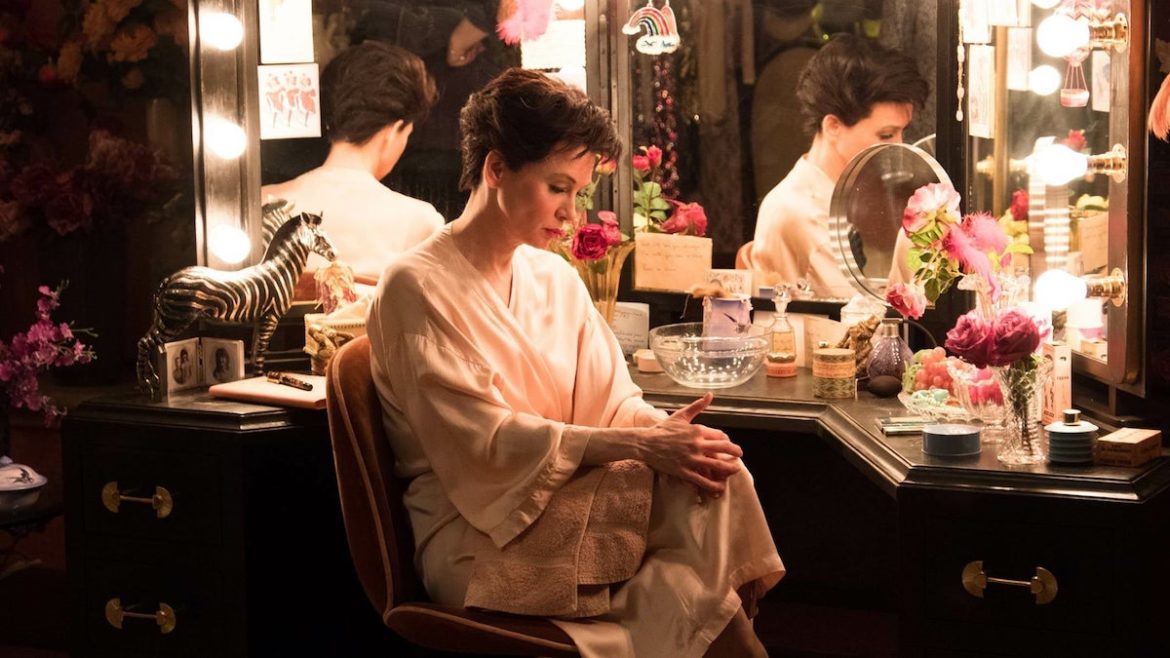
Speaking as a longtime fan of Judy Garland, I feel it is accurate to say that I stand in awe of what she put into the world as an artist. Truly. Even as she was trapped in her own perpetual hell, she still created something like a haven for the millions who fled into the cinema. But in cases like these, I hesitate to use phrases like "grateful" because that suggests that some kind of balance has been paid. Like the injuries she accrued across a lifetime of abuse have somehow been recompensed because her movies were just that good, and I don't think we were ever meant to convert the lives of our entertainers into commodities like that.
What Judy Garland needed, what all celebrities need, is the dignity of life off camera, off screen, off-stage. A more satisfying end to a movie claiming to show Judy Garland’s true self might have her attaining peace of mind with herself, not with faceless masses, something like Millennium Actress. As it is, the film presents closure as something people like Judy can only find from audiences, the ultimate reaffirmation of their hold over them.

This is also not a call to stop having favorite celebrities, but we should express this excitement in a way that doesn’t objectify them. I absolutely have celebrities whom I love to see interviewed on Stephen Colbert and whose projects I await with great anticipation. Fans can celebrate their favorite movie stars without sucking the life out of them. We can go without pointing out when a celebrity has put on some weight, Twitter doesn't really need to know whether we think this celebrity’s spouse is good enough for him/her, and we shouldn't reward paparazzi for their efforts by clicking on their photos which are certainly stripped from context. We already have their performances, we don’t need their souls too.
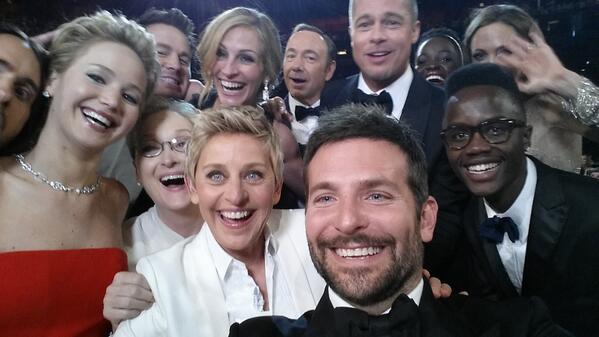
There’s a lot to be said for how much one invests in the movie viewing experience and in those bringing the movie to life. We might come out of the film feeling affection for the actors on screen, like they were our friends who went through the experience with us. Our natural response is to shower these individuals with our unfiltered affection, and we may even trick ourselves into thinking they crave this adulation. But not only is no one—no one—actually equipped to handle this hurricane of attention, but when we start to define a person by only what they do for us, they will inevitably be used as objects by other people.
Maybe the best thanks we can give these people is their humanity.
-The Professor
We'll close with this window into the soul of an entertainer who gave more than most into her performance
Excellent and well said. Thank you for writing this.
ReplyDelete